
The Essence of Guru Purab and the Significance of Panj Pyare in Sikh History
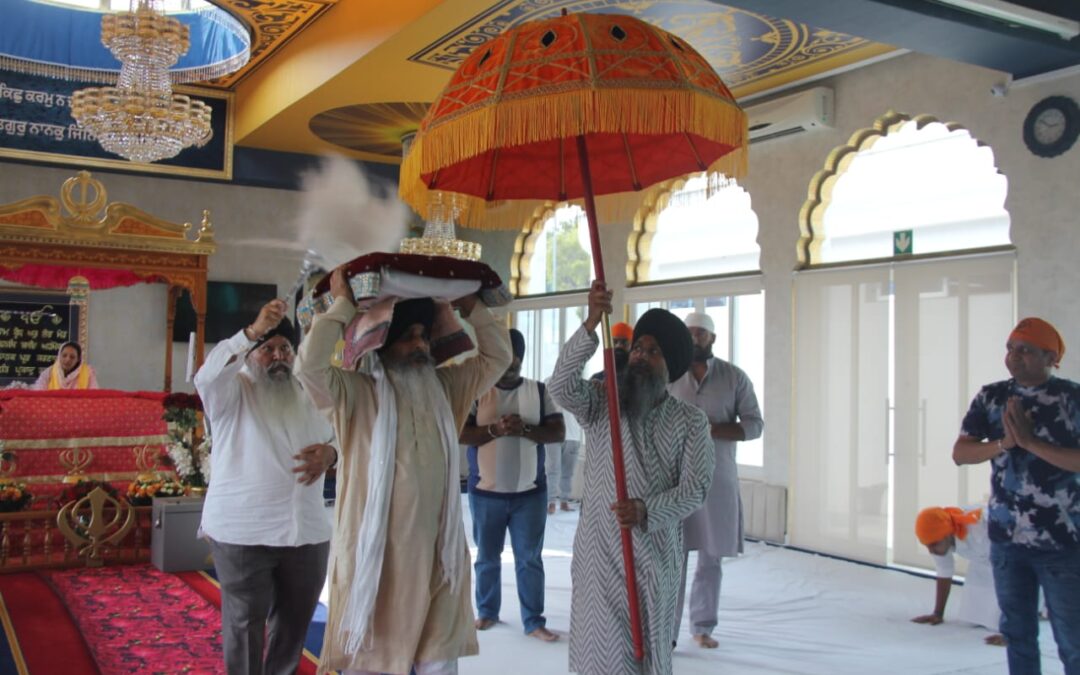
During the three days of Samagam, the entire premises of the Gurudwara Sahib echoed with the melodious renditions of Gurbani and Shabad Kirtan. Volunteers, both young and old, enthusiastically participated in the langar Sewa on all three days, showcasing the community’s spirit and dedication.
Talking about the Panj Pyare, or “the five beloved ones,” is profoundly significant in Sikh history. Their story originates from a transformative event in 1699, when Guru Gobind Singh, the tenth Sikh Guru, established the Khalsa, a spiritual warrior community, on the festival of Baisakhi. He called for volunteers ready to sacrifice their lives for their faith, and five men namely Bhai Daya Singh, Bhai Dharam Singh, Bhai Himmat Singh, Bhai Mukham Singh, and Bhai Sahib Singh stepped forward. These men, known as the Panj Pyare, were the first members of the Khalsa, symbolizing ultimate faith and courage through their willingness to sacrifice their lives without hesitation.
Their initiation marked a significant turning point, setting forth key Sikh practices and identity markers, including the Five Ks (Kesh, Kangha, Kara, Kachera, Kirpan), which are central to Sikh identity. Moreover, the Panj Pyare represented groundbreaking principles of equality and universal brotherhood in a society deeply entrenched in caste and social hierarchies. Coming from diverse social and geographical backgrounds, they embodied the Sikh ethos of egalitarianism and unity.
Mr.Harbinder Singh Sethi On Celebrating 554th Guru Nanak Jayanti

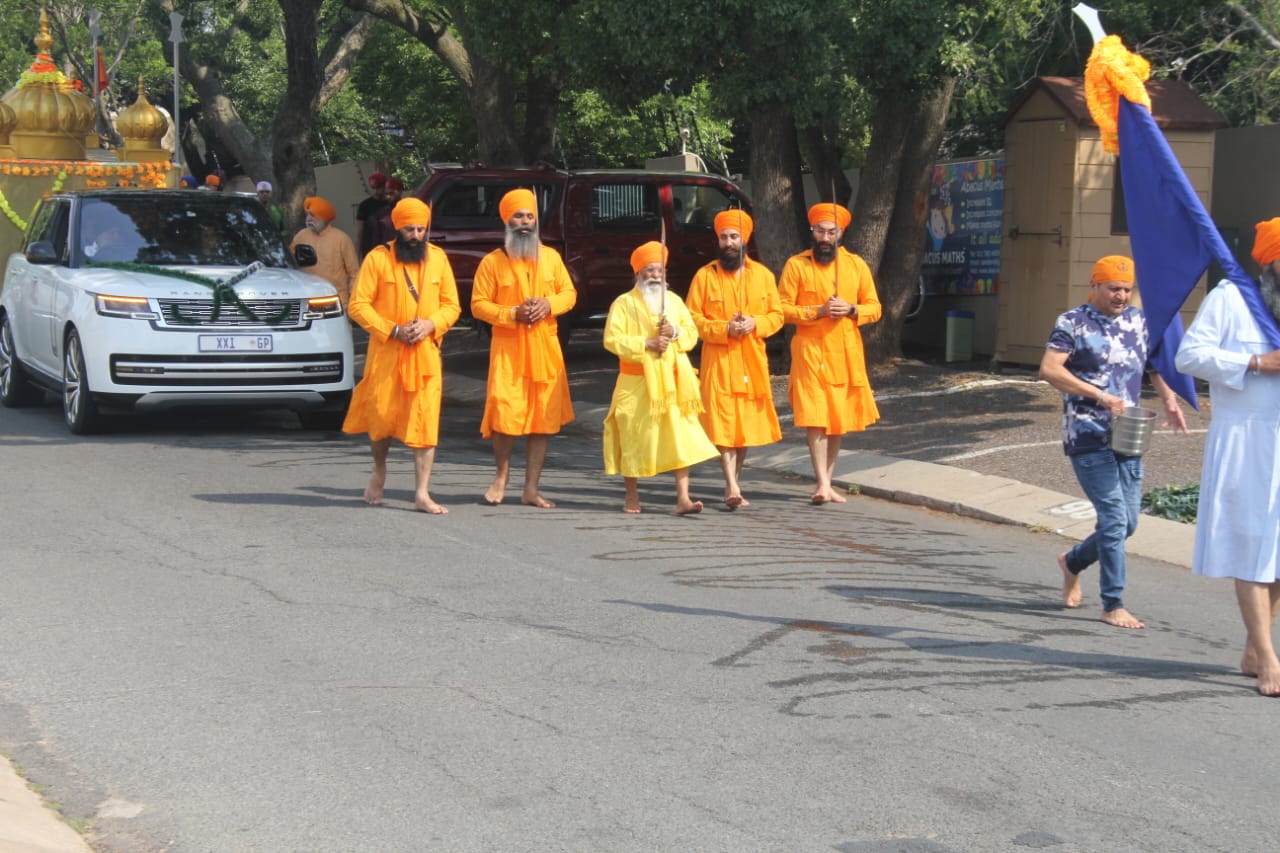
Here is what Mr. Harbinder Singh Sethi, Director and Trustee, Gurudwara Sahib Johannesburg had to say about the auspicious day of Guru Purab. “Today is a very auspicious day for the Sikh Sangat of Johannesburg and also the Sangat all around the world. Today, the Sikhs are celebrating the 554th birthday of Guru Nanak Dev Ji. And today in Johannesburg, we are getting ready for the Nagar Kirtan. The Nagar Kirtan is more like a parade which will take us around the block. This is to inform the other communities of South Africa about the privilege we have as Sikhs here in Sandton. We want others to know how important Sikhism is and it’s a prayer which is unique of its kind during this time of the celebrations of Guru Nanak Ji’s Prakash Purab.”
The Nagar Kirtan and Procession
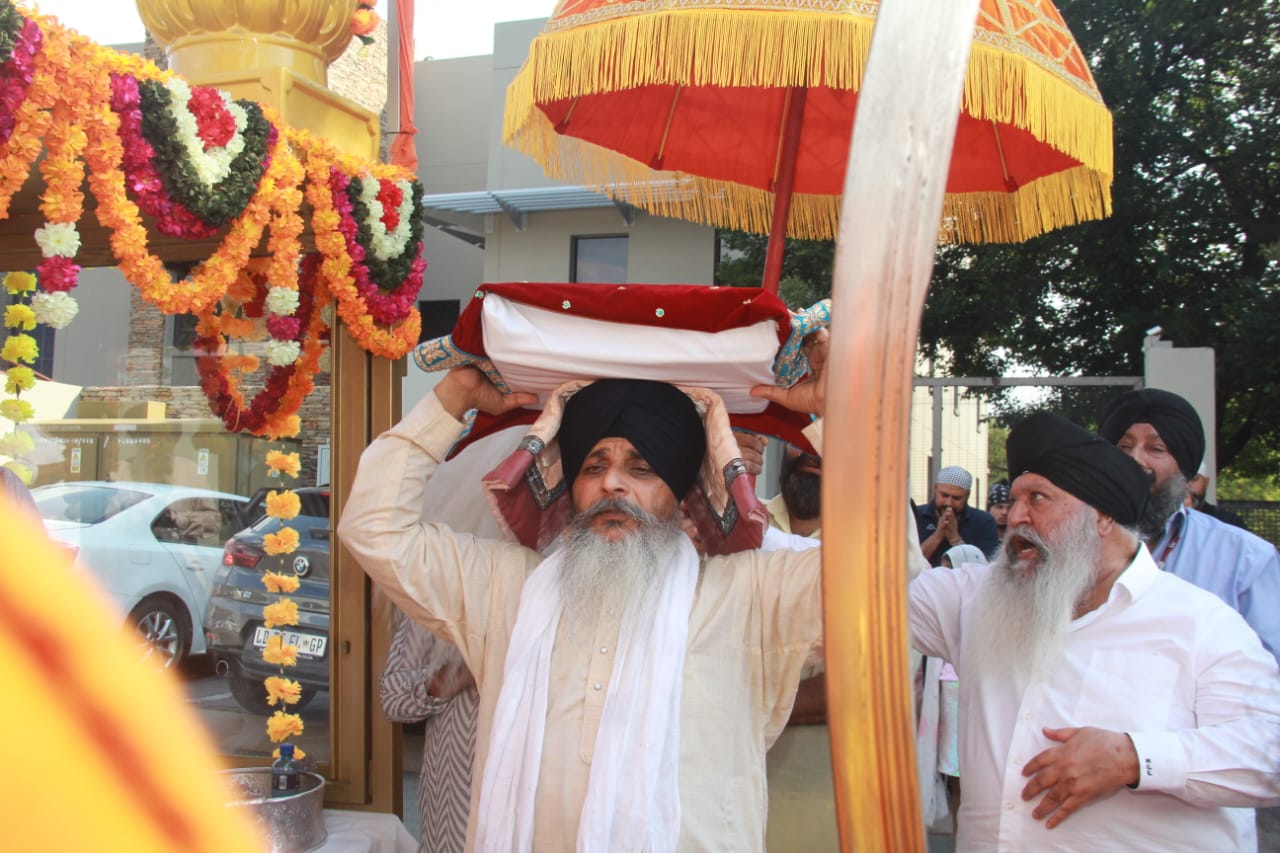
People from the Sikh community went to Gurudwara Sahib Ji and took blessings. In Sikhism, the seva bhav aka selfless service to people is considered a very important concept – it is an essential devotional practice. Volunteers also known as the sewadars had covered their heads with saffron-coloured bands while they followed singing hymns and selflessly cleaning the roads. The procession concluded at the Gurudwara Sahib with Ardas (prayer) followed by the Nishan Sahib Sewa.
In the following video, you can watch how the people celebrated Guru Purab with great devotion.
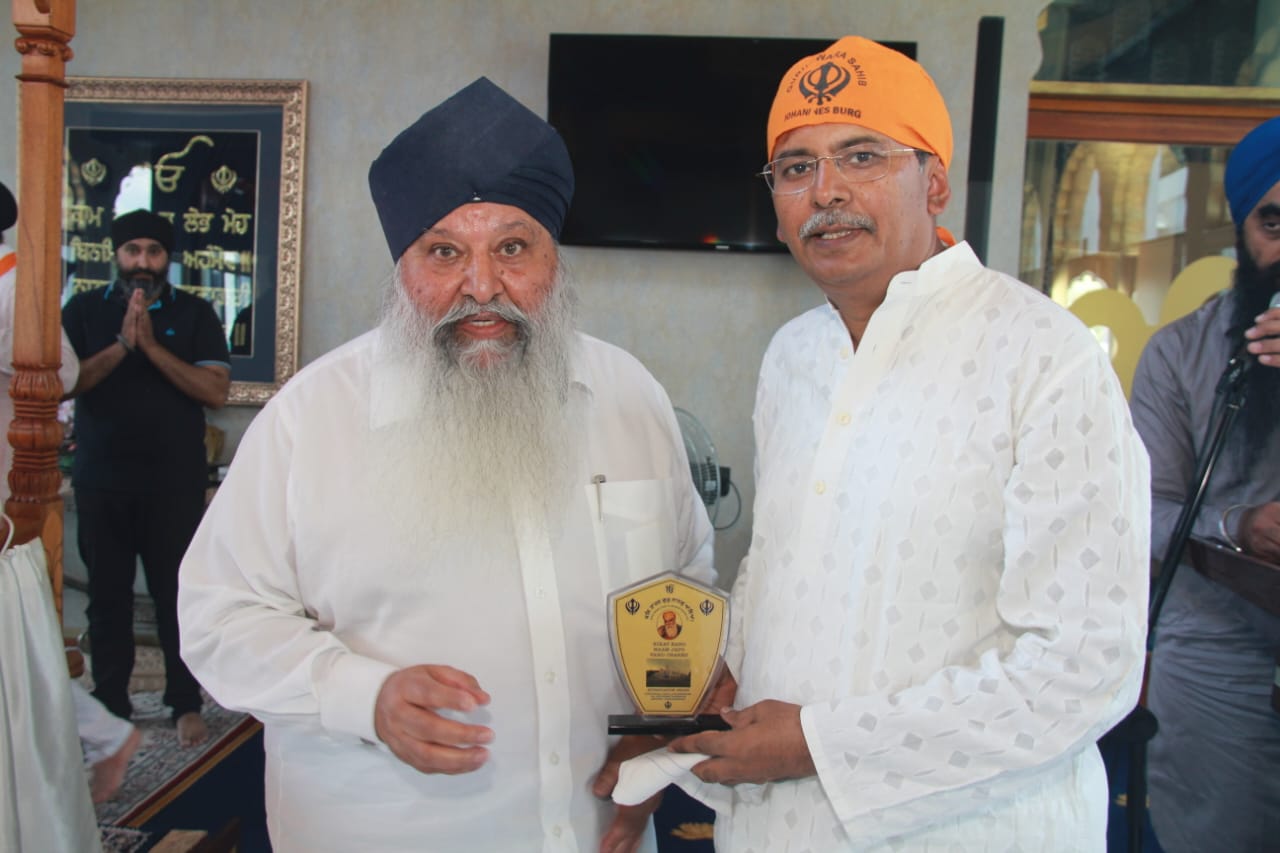
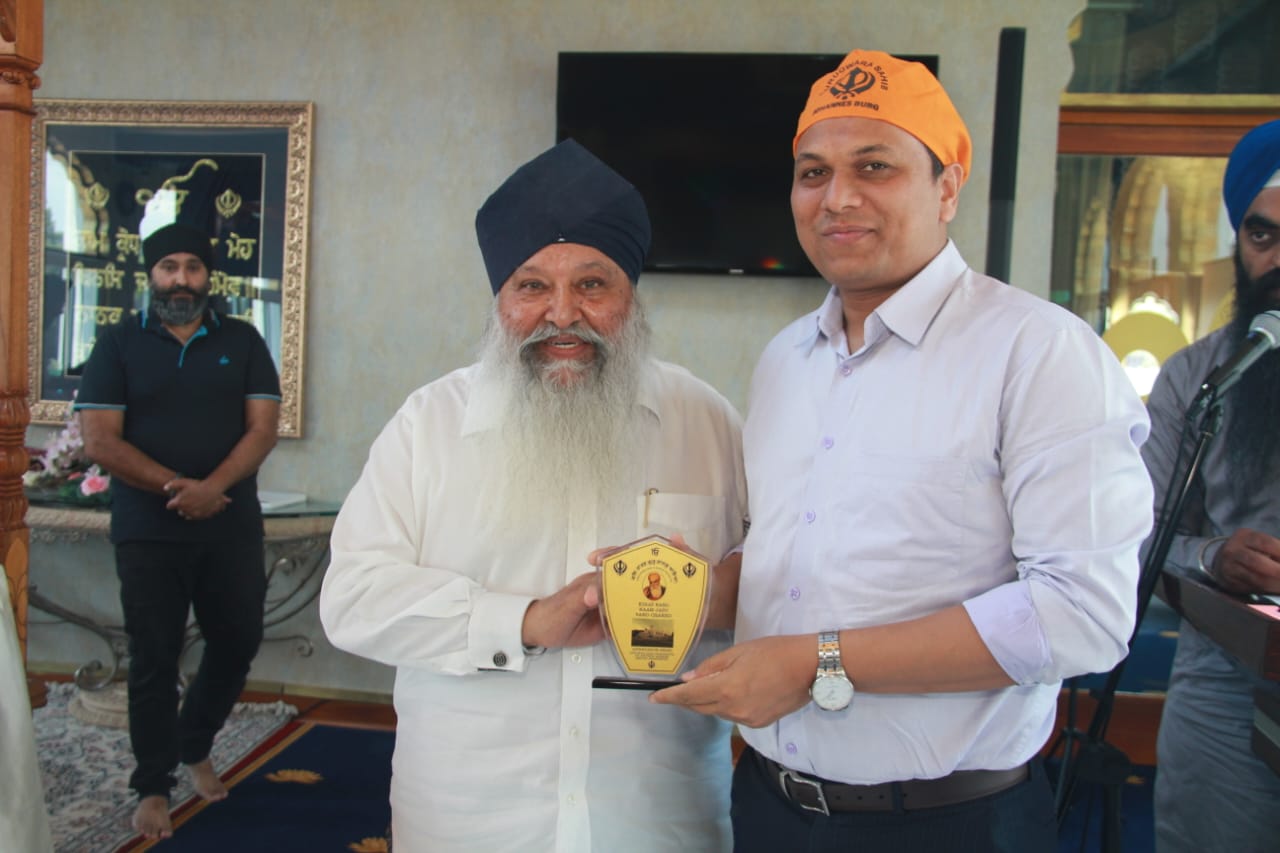
The Samagam event was attended by esteemed guests. These included the High Commissioner of India to South Africa – His Excellency Shri Prabhat Kumar and Consul General Shri Mahesh Kumar.
Mr. Sethi facilitated both Shri. Prabhat Kumar and Shri. Mahesh Kumar with a memento from Gurudwara Sahib Johannesburg and thanked them for attending the Samagam.

As the day concluded, the congregation reflected on Guru Nanak Dev Ji’s teachings. The sense of community, unity, and peace could be seen in everyone’s eyes. The celebration of Guru Purab at Gurudwara Sahib Johannesburg not only commemorated a sacred occasion but also strengthened the bonds in the community, reaffirming the values of Sikhism in the local community.
Here is a quick look at how the sadh sangat celebrated this auspicious occasion.
On 24th November, Arambh Akhand Path was organised in which people from all walks of life participated wholeheartedly. The next day (25th November) was followed by Madh Ki Ardaas, Nagar Kirtan and Sewa Nishan Sahib. On 26th November, people experienced the Bhog Akhand Path, Kirtan by Botswana/Durban Jatha followed by Kirtan by Hazuri Jatha from the UK. After this, people experienced the divine Khalsa Cubs Kirtan recital. The event concluded with Aarti, Samapati, followed by a speech given by the dignitaries and langar.